Tuesday, May 22, 2012

Showering, Heating Pad, Sleep, and Current Status With Crohn's


One thing I have been thinking about recently is small things to help improve Crohn’s symptoms. One thing I have found is that taking showers somehow does seem to help my pain. My pain is usually near or right below my belly button and last night in the shower I cupped my hand around my stomach and that really seemed to help out in targeting specific areas of my stomach. I have heard people using heating pads and when I go to my GI next Tuesday I will ask him if that is a good idea. I slept probably 10 hours last night and felt really good today. I think sleep somehow has an impact on how Crohn’s patients feel.

In the past few days my pain and symptoms have gotten worse. I just graduated from graduate school and have been helping the family move to our new home. This was stressful considering how many boxes have to be moved. The past few nights I felt nauseated and have been having 3-4 bowel movements a day which is much more than my typical 1-2. I have a feeling my GI will recommend Humira as I have been tapering off Prednisone. If I have to take Humira that is fine. According to the CHARM and ACCENT studies it seems as if Humira helps put 36%-40% of patients in remission. However, this means it has a 60% of not putting me into remission. Also some of the side effects can be nasty however in the study the placebo group had more side effects than the people taking Humira.  Currently, I am only taking 10 mg of Prednisone along with 2400 mg of Asacol (2 in the morning and 1 at night). I did read that one of the side effects for Asacol is stomach pain which doesn't make any sense considering Crohn’s involves stomach pain. It is amazing how just feeling how I felt before Crohn's is really now considered a perfect day. 

Sunday, May 20, 2012

Thalidomide For Crohn's


I came across an interesting study that showed that thalidomide may help against Crohn’s. Thalidomide was a controversial drug that woman took in the 1950’s for morning sickness. One drawback however was that it caused many birth defects.

This study in the December 1999 issue of Gastroenterology showed that when 14 patients were treated with thalidomide they all responded in some way to the drug. 67% had clinical remission with more than 50% in just 4 weeks. The study was done on patients who had not responded to any other therapies. It would be interesting to see how patients with mild-moderate would respond to thalidomide.When a 10 patient trial was done by Cedars-Sinai Medical Center 70% of the patients responded to the drug however only 20% had clinical remission.

In probably the only study to date published in the February issue of Journal of Pediatric Gastroenterology and Nutrition 5 patients were picked out of 96 (thalidomide was used as a last resort before surgery) 80% of patients were in remission even 19-24 months after treatment.I am really curious to see much larger scale trials done on thalidomide and see if there are any long term side-effects for both females and males. 

Friday, May 11, 2012

Saturday Study: Crohn's and Sugar


Today is Saturday and since last Sunday I have not eaten sugar. This chance hasn’t really brought any distinct difference in how I feel in terms of pain. However, I do feel healthier. I actually did surprise myself considering I had cookies, Frosted Flakes, and other goodies in the pantry along with milk in the refrigerator. I thought I would have withdrawals however didn’t. Even though I haven’t eaten sugar in almost a week it is still on my mind. Right now I wouldn’t mind a brownie sundae.

I was curious about the effect of sugar on Crohn’s however what I found in the academic literature was mainly sugar intake at the diagnosis of Crohn’s. This study done in 1980 showed that in interviewed 120 people with Crohn’s and found that patients with Crohn’s ate more sugar than those with ulcerative colitis when interviewed. Meanwhile this 1983 study showed that Crohn’s patients not only consumed more sugar at the beginning of diagnosis but also consumed significantly more sugar after diagnosis. However in this April 1998 study that appeared in the European Journal of Clinical Nutrition it was found that “There appeared to be no clinical advantage to the use of reduced sugar diets in Crohn’s disease treatment”. This study however was funded by The Sugar Bureau how does want to make sure everyone is getting their daily dose of sugar. I found this 1981 study that had no sponsorship which concluded that “The increased consumption of added sugar in patients with Crohn’s disease does not appear related to other dietary abnormalities and may simply reflect a deficiency perception of sweet taste in patients with this condition.” One possible theory may be that the body in Crohn’s patients absorbs sugar differently.

What seems apparent from the literature is that Crohn’s patients have higher sugar intake once they get Crohn’s however if they reduce their sugar intake it really doesn’t make a difference. It is interesting to know why this is. Perhaps someone could do a long term study measuring sugar intake through blood tests and see if there are any changes in symptoms. I personally have not eaten sugar for the past week because of the health benefits. The only side effect I have noticed is feeling a little bit more tired however I feel cleaned out in a way. No doubt more research has to be done on the impacts of diet and Crohn’s. However, the evidence seems that diet doesn’t make much of an impact on Crohn’s patients.

Vedolizumab for Crohn’s?


This press release shows that in a randomized, placebo-controlled, double blind test (usually known as the gold standard) in clinical trials with 1,115 patients showed that those who failed conventional therapy showed signs of improvement that were statistically significant (which means not due to simply chance alone). Some adverse effects were reported such as joint pain, fever, upper respiratory inflammation, and some other side effects.  Apparently more information will be provided at a medical congress.

The results with vedolizumab have been good for ulcerative colitis. A comment in the Inflammatory Bowel Disease Journal calls into question how effective vedeolizumab really works however it was published in March of 2010 which was before this new study was completed.

I hope the maker of the drug Takeda does prove that the drug is both safe and effective. As I have mentioned before I am all for innovation as long as there is science to back it up. Welcoming a new biologic will create more competition in the treatment of Crohn’s and give patients another option which is always preferred to fewer options.

Thursday, May 10, 2012

FDA Panel Approves Tofacitnib, Possible Crohn’s Treatment?


A panel of outsiders from the FDA in a 8-2 decision approved tofacitnib. The panel agreed in a 7-2 vote the drug was safe and 10-0 vote that the drug was effective. Usually the FDA follows the panel recommendations but doesn’t have to. A final decision on whether or not the drug should be approved will come August 21. The drug will be approved for rheumatoid arthritis. However, one possible use of this drug may be Crohn’s disease. Pfizer who makes the drug in their Q3 Earnings Call in 2011 said they were starting Phase III trials for ulcerative colitis and Phase II trials for Crohn’s.

One study  done by Dr. William Sandborn at University at San Diego showed the tofacitnib was not that effective in Crohn’s. However, Edward Loftus Jr., gastroenterologist at the Mayo Clinic believes that it may be due to the low dosing that was given and that the story was too short to really see an effect.

Tofacitnib does seem to help people with ulcerative colitis however. The study showed that 76.3% of patients who took 15mg of the drug achieved a response which was much higher than the placebo group. One side effect was the drug did increase cholesterol levels and trilevels. However, I wonder if this can be managed through a cholesterol drug and or exercise.

One of the main advantages to tofacitnib is that unlike Humira, Remicade, or Enbrel it can be taken by pill form instead of being injected. Cost is another big issue. The cost of taking biologics such as Humira, Remicade, and Enbrel can be very costly.

Hopefully studies will show that tofacitnib will be effective in Crohn’s. Creating competition will be a good thing for the biologics since their patents never expire. More competition will create pricing wars which will bring down prices and increase quality. 

Saturday, May 5, 2012

Saturday Study: Rifaximin for moderate to severe Crohn’s disease


In this study which was published in the March 2012 issue of Gastroenterology the investigators found that using 800 mg of rifaximin two times a day for 3 months induced remission with very few side effects.

Three different doses were given: 400, 800 and 1200 mg. At the end of the three months 62% of patients taking the 800 mg dose were in remission. A lower percentage (only 54% for 400 mg and 47% for 1200 mg) achieved remission. It is interesting how the highest dose was not the most effective. There might be some sweet spot to this type of medicine. Patients given the 400 and 800 mg doses also suffered from fewer side effects.

I found an older study which studied patients who received rifaximin from 2001-2005. The study showed that 65% of patients went into remission. The dosage was 600 mg. The remission rate was 70% for people who were not on corticosteroids (Prednisone).

Perhaps rifaximin can be used as another tool in the war against Crohn’s. Rifaximin is used to treat traveler’s diarrhea caused by e-coli.  There is the MAP theory which I blogged about here (still controversial).If a test for MAP does come within the next couple of years perhaps researchers could study the effects on those that take rifaximin who have MAP present in their systems and people who don’t have it in their systems to see how effective it is.

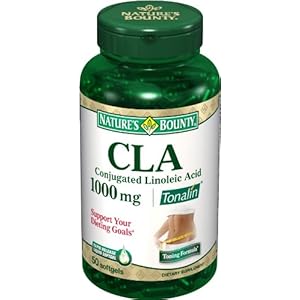
Conjugated Linoleic Acid (CLA) for Crohn’s?


     I recently came across this article that may show that in this study conjugated linoleic acid (CLA) may help patients with Crohn’s disease. CLA is a natural fatty acid found in milk and rudimentary products. CLA can be purchased over the counter.  A study was down between Wake Forest Medical Center and University North Carolina School of Medicine. The study showed that the patients who took CLA showed a 50% improved in their conditions. One problem however with the study was that it was not controlled or randomized so no placebo was used.  For me to personally use this substance I would have to see more research to prove that it is indeed effective.  I am all for creating more weapons the patient’s arsenal against Crohn’s however there has to be peer reviewed data to back it up. It would be interesting to see what happens in a double blind randomized test to see what the results are.